Sorry it took so long to judge the entries, but I was overwhelmed. That’ll
teach me to host an international, pan-galactic, cross-universe
coding contest. : )
Grand Prize Winner and Best Developer Tool:
Stoyan Damov
Stoyan wins the grand prize of free admission to the
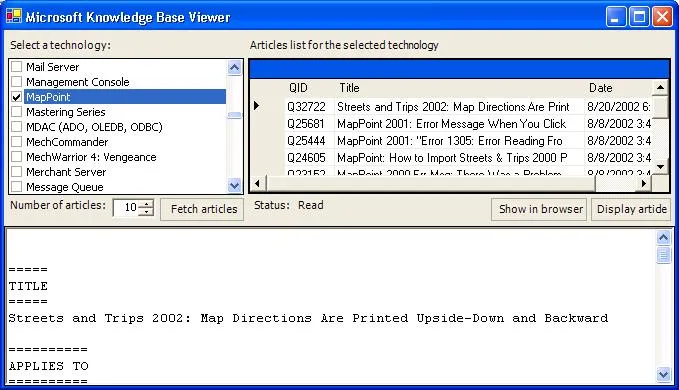
Web Services DevCon. His entry is shown here:
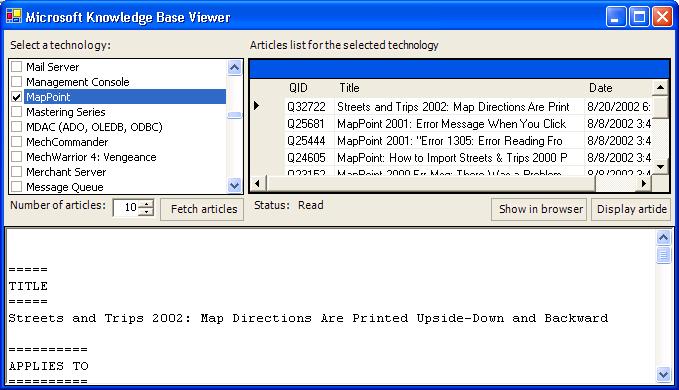
KbView allows the user to pick a technology or set of technologies that s/he
is interested in and see what’s new in that space. Once the articles are
fetched, they’re listed on the right hand side, where they can be shown directly
in the text viewer below or they can be hosted in a separate IE window. Also,
once the article has been downloaded, it’s cached for quick access for next time.
This is an app that I will use. Great work, Stoyan!
Sorin wins a year
subscription to MSDN Universal for his submission:
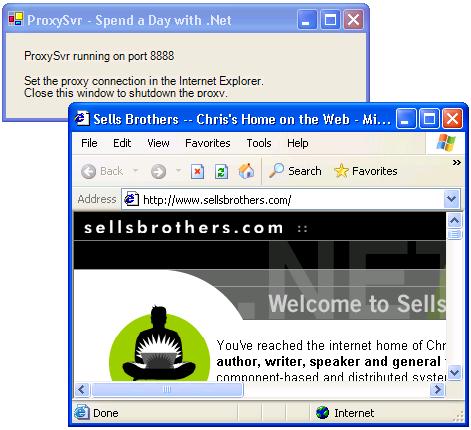
Sorin’s submission is a functional proxy server and represents his first .NET
project ever. It’s fully asychronous and uses non-blocking I/O. It’s quite a
testament to what can be done in .NET in a single day.
Jeff wins a 12-month
subscription (5 points) to Safari Tech Books Online for his entry:
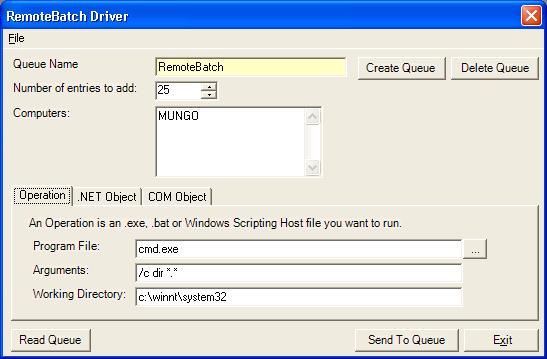
Jeff’s entry was the most polished I got, both in the UI as shown above, but
also in the documentation, which included a market justification. I can see Jeff
selling a version of this tool soon. The UI above is a front end to an NT
service, also written in .NET, that takes jobs off of an MSMQ queue for batch
dispatch. Because of the flexible architecture, these jobs can be spawned on a
single machine or across multiple machines.
Igal wins a
signed box copy of Visual Studio .NET for his VS.NET add-in:
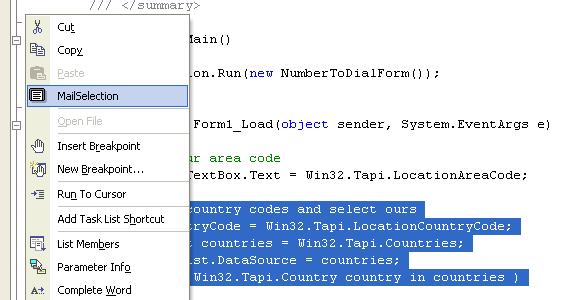
Igal’s submission is simple, but effective. I often mail snippets of code
around and now I can do it with the context menu from without VS.NET.
Dejan won his pick of a combination of things, but I couldn’t talk him into
taking anything — he just wanted to compete. His application is a fully
functional RSS reader:
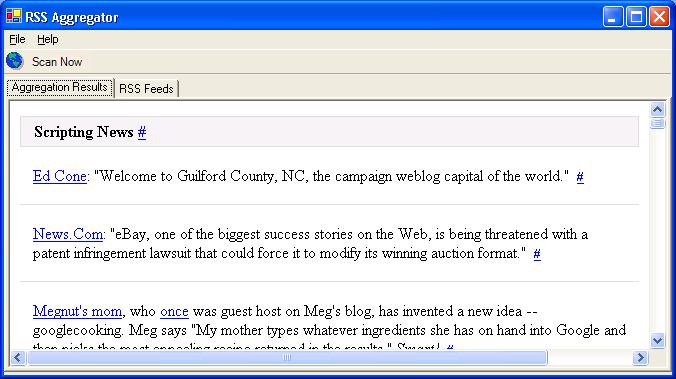
Dejan’s RSS reader has two tabs, one for the RSS feed administration itself,
persisted between sessions, and one for the combination of the content for all
of your feeds in a single web page, cached between sessions.
Best Use of SQL: Simon E.P. Wilson, Markus Burri & Thomas Schwarz
Simon, Markus and Thomas win a 10-user copy of rmTrack for their SQL Stored
Procedure code generator:
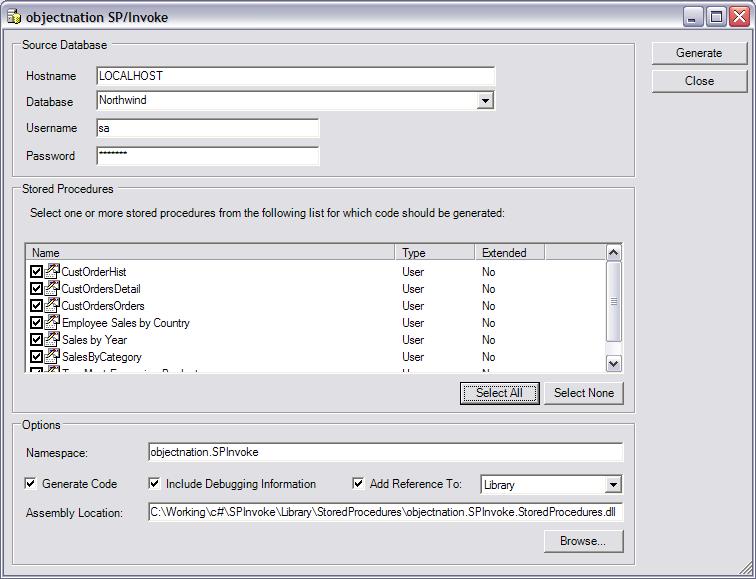
Once the settings are chosen, the generated code lets the user make calls
into the stored procedure from their .NET language of choice almost as if the
function was a native .NET method:
class MyApp {
    static void Main(string[] args) {
        // Create Connection
        SqlConnection conn = new SqlConnection(@"...");
        conn.Open();

        // Invoke the Stored Procedure
        SalesByCategory.Result res = SalesByCategory.Invoke(conn, "Beverages", "");

        // Show Results
        foreach (SalesByCategory.Row row in res.Rows) {
            Console.WriteLine("{0} : {1}", row.ProductName, row.TotalPurchase);
        }
        conn.Close();
    }
}
Honorable Mention
There were so many other great entries that I couldn’t narrow it to just the
big prize winners. The following were each awarded their pick of a book or a
free software package:
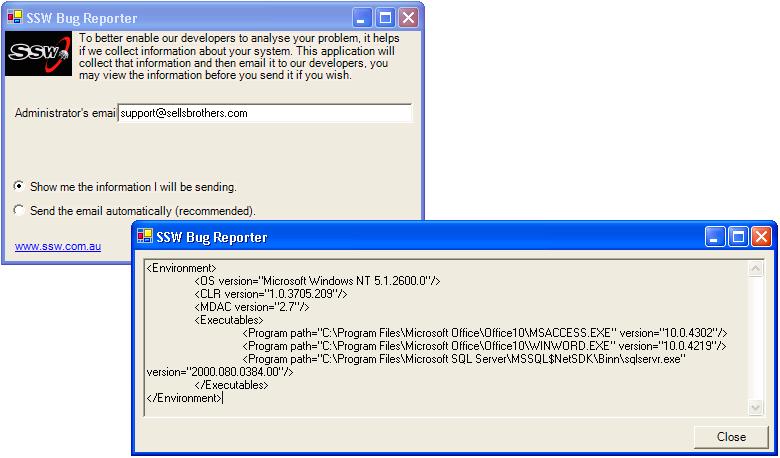
- Best Use of XML, Adam Cogan: This entry was cool because it used a
smart client to gather information about a user’s system, email to deliver it
and XML to make server-side processing a snap (screen
shot).
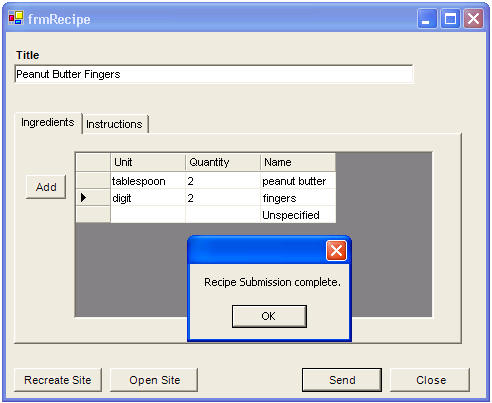
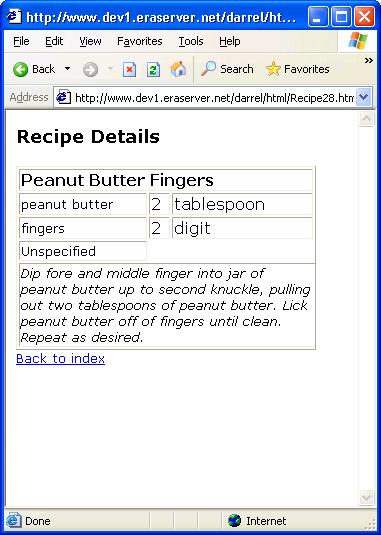
- Best Web Service Client, Darrel Miller: I liked Darrel’s
application because of the nice mix of a smart client front-end to capture all
settings to make a single, atomic web service call and the production of a web
site based on the posted data (screen
shot 1, screen shot 2).
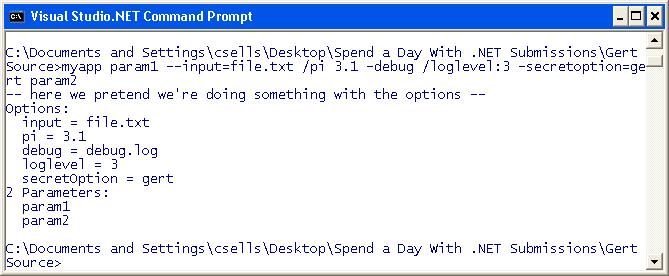
- Best Technical Insight, Gert Lombard: Gert’s command line parser
was near and dear to me for two reasons. One, he’d built a command line parser
based on .NET’s Reflection, just like
I’ve done in Genghis with the CommandLineParser class, and two, he built it because he fell in love with Reflection,
just like I did (screen shot,
source).
- Best Game Library, Richard Caetano: Richard’s entry wasn’t quite
complete, but I love Poker as much as I love .NET, so I thought I’d point out
that he’s provided a complete managed card drawing library, in case anyone
needs one (screen
shot and source).
- Best Entry From High School Student, Ryan Dawson: I’m not sure I
should be encouraging such behavior, but I certainly spent my fair share alone
in my parent’s basement with my computer and I turned out all right (didn’t
I?!?), so I thought I’d mention that Ryan was the only high school student
(that I know of) that submitted an entry. Also, he used
my pi calculator to calculate 20K digits of pi for extra credit, so
clearly things are working out for him. Remember to cite your sources, Ryan! :
)

 September 15, 2002
Fun
September 15, 2002
Fun
 September 13, 2002
Spout
September 13, 2002
Spout